Se afișează postările cu eticheta directions. Afișați toate postările

vineri, 22 aprilie 2011

Three days in Rome – part II

by Iuli

Our second day in Rome was dedicated to a journey on foot towards the Vatican and its surroundings. We have had the real pleasure to enjoy the Pentecost service in Piazza San Pietro and, in spite of a merciless sun, there was so much solemnity and welcoming in the air that we didn’t feel like leaving anymore.


In the end we chose to leave the Vatican museum visit for our next day and headed ourselves toward Castel Sant'Angelo (less known as the Mausoleum of Hadrian), the medieval refuge fortress of the popes. The castle is circular in shape and offers an inner spiral climb towards the upper part, where the visitor is met by an enchanting display of rooms and terraces with a great panorama towards the center of Rome. If getting there at lunch time, it would not be a bad idea to try and serve a meal on the terrace at the top of the castle, with an incredible view over the Vatican and fare prices (about 10e for one tasty lasagna offered together with a coke).

Descending from the Sant’Angelo we followed the river Tevere (Tiber) downstream toward the picturesque Trastevere district where a more laic and humble Rome, with narrow streets and small houses greeted us. If you’re a bohemian going to Rome, Trastevere is definitely a must see for its authentic atmosphere and also its many pubs and restaurants.

From Trastevere you can return towards the city centre by crossing the Tiber on the bridges across the Island, a path leading directly to the interesting and quite well conserved ruins of Teatro di Marcello and then turn on Via del Teatro Marcello, along the Capitoline Hill and upwards to Piazza Venezia.


A rewarding choice for ending our second day was a twilight walk through the Navona district, with a short stop at Piazza della Rotonda and the Pantheon and ended in Quirinale, at the crowded but fascinating Fontana di Trevi. It was there that we dropped all the change in our pockets hoping for a return with more staying days and that we have enjoyed a well deserved couple of hours of peace and rest, in spite of the cosmopolitan crowd swarming around us.


The journey back to hour hotel has led us up on the Esquiline towards the largest church in Rome, Basilica di Santa Maria Maggiore whose location it is said to have been chosen by the very Blessed Virgin Mary.


We have kept our last day in Rome for a thorough visit at the Vatican and it was well we decided to do so, as the entrance queue was surrounding the city on its north-eastern side and we have spent about three hours waiting to get in (you can avoid this by paying a tour guide but as we were already on low budget and had no idea what was laying ahead of us…).


Once you get inside, after passing the multiple security scanners, the remaining thing to do is go with the flow… your feet already in great pain from the three hour queue stand. It is not necessary to list the items displayed in the museum nor the glamour of the Apostolic palace… but the sacred atmosphere imprinted in the walls highly contrasting with the more human opulence and beautifully blended with breath taking works of art are all things not easy to forget about. The journey through the overwhelming maze of the Vatican is crowned by the famous Sistine Chapel with its frescoes painted by great Renaissance artists, Michelangelo included and which is hosting the Papal conclaves.


Later the same day, tired by our visit to the heart of the Catholic Church, we have taken another walk in the Navona surrounding with stops in Piazza Navona – a wonderful display of Baroque works of art – and a visit inside the Pantheon, the enormous ancient temple of all gods where the tomb of Raphael is to be found.

After treating ourselves with a 5 euro ice-cream in Piazza della Rotonda we have taken a one last walk towards the Fountain of Trevi just to find it less crowded than in the previous evening and headed then to our hotel passing again through Piazza Venezia and then along the Trajan’s Forum towards the Coliseum and the Esquiline Hill wherefrom we have enjoyed one final view of the ancient city.


Three days could obviously never be enough to explore all that Rome has to offer but if you don’t care that much about your feet and can bear the tiredness of walking around its major sites and their surroundings you will definitely enjoy enough cultural and historical atmosphere to compensate for the lack of time and get a very good picture of its never setting glory, magnificence and power.

marți, 15 martie 2011

Three days in Rome – part I

by Iuli

It is many times said that Romanian is the second spoken language at Microsoft...this could or could not be true... but I think Romanian is for sure the second spoken language in Rome. It’s not the officials, nor the guys begging at the street corners (though those could count for it as well) but it’s always the hotel assistant or the girl at the ice cream shop (the lovely and yummy and costy ‚Gelateria’) or even the Indian guys at the supermarket selling Romanian ‚seminte’ (sun flower seeds) and other products that have ‚for sale also in Romania’ written all over them...

Rome was never my primary visiting objective... I am honest enough to say I was never enchanted at the idea of visiting Italy, partly because it’s kind of easy to reach by us, Romanians and you can always postpone it in favor of other, more exotic, destinations but also because I feared that, even if I was going there as a tourist, I would have been treated as an ,invader’ (who has been invading who? by the way...) by people whom I would have had to speak about my origins... I was wrong and now I am happy I can speak about the wonderful mother city of all proudly called ‚Latin’ civilizations.


Taking advantage of the Romanian official holiday that is given 50 days after Easter – called ‚Rusalii’ (Pentecost or the ‚the Descend of the Holy Spirit’) – a Christian celebration with some Roman origins, dedicated to the cult of the dead, we have decided to try a short visit to an Europe city with some Mediterranean air and Latin atmosphere. As Barcelona had been seen the previous years, Rome became the second best choice so we started to dig up for some fairly priced air tickets. When searching for cheap tickets within Europe I always favor the low cost companies and the ones regularly operating in Romania are, of course, Blue Air and Wizz Air… Both companies have good prices and good flight times from Bucharest to Rome but one should never forget that with them all is well as long as all is going on well… God help it for some flight delays or other bad situations, as calling the company costs you about as much as it costs to dial an erotic line and even so, you would hardly get any help… and it would always come too late, anyway.


We have used venere.com to find suitable accommodation and chose Art in Accommodation hotel as our host for our three nights in Rome. The hotel was ok from the cleanness and silence point of you but with a shared bathroom  which is not a big deal for a three nights stay, especially considering it’s awesome location (in the center of the city, 10-15 minutes walk from the Termini station). The hotel staff (the owner and a Romanian - !!! – lady) were very nice and welcoming and kind enough to offer us a map of the city which I recommend to be asking for at your chosen hotels or tourist info’s… although I think you can find it even at newspaper or ticket selling places – a map of the city centre and all its attractions, very clear and easy to use.

We didn’t use public transportation in Rome so I cannot be giving much information about it… although we have dug up some info related to the subway, we only got on it once and weren’t very happy about it… as the written indications were quite unclear and misleading (…if you have ever been to London or Vienna you would get my point). Our precious map has led us everywhere on foot and I am happy we did so because in Rome you can stumble upon a piece of art and / or history at almost every street corner.


On our first day in the city we have decided, as expected, to firstly go and see the Coliseum… partly because it is the very landmark of Rome but also because it seemed the closest to our hotel location and the sun was already at noon. To our enchantment we only had to walk about ten minutes from the hotel, cross Parco di Traiano on the Esquiline Hill (where emperor Nero’s Domus Aurea is located) and there it was! The place where our ancestors, the Thracians had won their glory as feared gladiators and that has become the icon of the Roman Empire.


The amphitheatre is an amazing thing to see from the outside, but for a bite of real history you need to pay the entrance and queue for more than an hour at its gates. And yes, if you have ever wanted to visit Babylonia, you can for sure find it there – meaning that while waiting I could hear almost any language spoken on this planet.

Located right next to the Coliseum there is the Palatine Hill (or Mons Palatinus, as the Romans called it), the very centre of ancient Rome and, as the legend says, the place where Remus and Romulus had been found by the she-wolf that raised them. Coming down from the Palatine, on Via dei Fori Imperiali, the central street of Rome that runs from the Coliseum to Piazza Venezia, located between the Palatine Hill and the Capitoline, there is the Roman Forum – the heart of the public life in ancient Rome, surrounded by ruins of government buildings, where triumphal processions, public gatherings and even trials were held in the antiquity.

The walk down to Piazza Venezia is rewarded by the view of the magnificent Vittoriano, the monument built by King Victor Emmanuel II in the honor of the unified Italy. In Piazza Venezia there are also located the Palazzo Venezia, the Church of Santa Maria di Loreto and the Trajan’s Column built by the emperor to commemorate his victory in the Dacian wars and depicting on its spiral bas relief the epic of the Roman fight and victory.


(to be continued)

duminică, 6 martie 2011

Hong Kong: Chinese, Chinese and more Chinese...part III

by Bobo

OK, Hong Kong is the place where malls are everywhere and shopping can be considered a national Olympic sport. There are however plenty of places worth seeing (yet if anyone keeps willing to be part of he shopping marathon, all of them are full of shops so that sightseeing can be easily combined with famous brand stores and fake markets).

One of them not to miss is Victoria Peak. You can get there either by tram (the Peak Tram – but you need infinite patience…some two hour queue may cut your enthusiasm), either by bus or…a taxi. I personally got there by chance: the visit was scheduled for another day, but getting to the world’s largest escalator (a network of escalators 800 meters long – the world’s longest of which I had been reading about in the Lonely Planet guide) I said to myself…let’s see where it gets. And when I got up (up meaning the end of the escalator – which was anyway finishing kind of suddenly and a bit wacky) I could see The Peak indicators. As we are not the greatest action guys in the world, in order to come down 800m (on normal stairs, this time, the difference between start and end being 135m) we decided to see the so greatly advertised peak. On a sign there was written you could get there on foot or by taking a cab, but it seemed like they have forgotten to mention… the direction to follow. The taxi to the peak was written to be around 20 HK dollars but no one could tell us (or could understand what we wanted) in which direction we had to go… so we said ‘to the taxi’ to ourselves (2 euro didn’t seem like such a big deal). Only that the taxi, instead of 20 HK dollars cost us 50… but that is another story to be told.

When we have finally reached the top, as it was the second day of the Chinese New Year, the crowd was even bigger than in the shops. The view however is worth every penny. And I am not just figurately speaking: in order to get to the terrace where from you and see the whole city of Hong Kong, you need to pay another 10 HKD per person (the terrace obviously being at the top of a mall). But the view from up there is spectacular: sky-scrappers cramped into each other, the green covering the mountains, the ocean blue… and, unfortunately, the omnipresent smog grey dominating the entire landscape.

As it is trying to become a city as cosmopolitan as possible, Hong Kong has had for a few years (about 5 or so) a Disneyland park. For someone like me, who has grown up with Donald and Goofy, the Disneyland was on top of the things I wanted to see in HK. It is pretty easy to reach. Located on the island of Lantau (where the airport and the giant Buddha statue are also located) it has its own subway station. However, the park was… disappointing. Compared to the one in Paris, it seemed a lot smaller and far more… crowded. Ok, ok, it is located in Hong Kong and it was normal to be crowded (especially as it was the third day of the New Year) but… not like that. Anyway, if the Disney stories have still an effect upon you, the park is still worth paying a visit.

You must not miss a ferry journey in Hong Kong. It is anyway difficult to miss as it is the most accessible and cheap way to cross from the continent to the island and backwards. And the Star Ferry Company (one of the ferry operators) is the oldest in Hong Kong… since 1880s.  And their ferries are a piece of history… the one I’ve first travelled with dated from 1931… fortunately the ocean was calm enough so I didn’t have to ask myself about the safety of the vessels built in the 30s. You can take a daytime or a night time cruise. They are both worth as the view you get from the ocean is unique. If the money is a problem… a simple crossing does the job: it only costs 2.5 HKD (about 25 cents) and my advice is to take a day time journey first and a return at night time… in this way you get to kill two birds with one stone.
From Hong Kong it is easy to get to Macao. A one-hour ferry ride and you are there. A city that is extremely different from Hong Kong (maybe because it used to be a Portuguese colony and the streets still have names like ‘avenida’ written on the same blue ceramic tiles as you can see them in Lisbon) where gambling is at home. It is actually the only place in China where casinos are legal and where the Chinese come to ‘invest’ their savings in roulette and other games (which would normally get you bankrupt… yet they see them as an investment… that is rarely getting them any profit).

It is a city full of color (especially gold) and with hotels that catch the view by various peculiar forms. It is a city that (from my point of view) can be visited in a single day – this only if, of course, you don’t have any money to drop at the green table.


In the case you want to escape from the Romanian cold and plan a winter time journey, you should check the Chinese New Year date and try spending it in Hong Kong. The festivities last for 3 days and the second day fireworks are a spectacular thing: they last for 26 minutes and leave you with your mouth open. Along with the fireworks there is a light festival in Tsim Sha Tsui, parades and many, many other things. Nevertheless, the majority of bars and restaurants add a 10% tax to their prices for those party days and nights (their characteristic way to party – do not imagine terrace outings and crowded clubs – in the old days it used to be a family party, in restaurants or meetings with friends… now the party is with the credit card in your hand filling the wardrobe with whatever you do not need).

The most fascinating objective is, however, Hong Kong. Anywhere you were and anywhere you looked the view was another. Two things remained however constant: the sky scrappers and the crowd. In spite of all these, it still remains a fascinating city worth to be seen by anyone.

joi, 3 martie 2011

10 places and things to see in Barcelona... and how to reach them


by Iuli

          For the case you have already packed for Barcelona but have no idea what you want to see there or if you have little time for the visit and want to make sure you don't miss anything important of the many attractions in one of the world's happiest cities or if you just want to make a picture of what Barcelona has to offer, below there's a list or random 'wonders' not to be missed in Gaudi's city:


SAGRADA FAMILIA (TEMPLE EXPIATOR SAGRADA FAMILIA)

  • Official site: http://www.sagradafamilia.cat/sf-eng/?lang=0
  • Address: Calle Mallorca 08034, Barcelona
  • Opening hours:  09:00-18:00 (Oct. – Mar.), 09:00-20:00 (Apr. – Sep.); 25 si 26 Decembrie, 1 si 6 January: 9:00 - 14:00
  • Tickets: 12.50€  – adults; 10.50€ - elderly, students under 18 years. The price does not inculde the cost of the elevators to the towers - 2.50€
  • Subway: Sagrada Familia (blue line, L5 and purple line, L2)


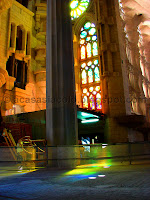
A gigantic temple built by the master architect Antonio Gaudi. The building is under construction since 1882 and is estimated to be completed in 30 - 80 years (depending on financing and resources). It is said that Gaudi took the construction of the cathedral at the age of 30 and dedicated his whole life to it afterwards, even living inside the construction. When finished, the cathedral would have 18 towers: 12 dedicated to the Apostles, 4 to the Evangelists, 1 to Christ and 1 to Virgin Mary.


THE BARCELONA AQUARIUM (L’AQUARIUM DE BARCELONA)

  • Official site: http://www.aquariumbcn.com/
  • Address: Moll d' Espanya, Port Vell - 08039 BARCELONA
  • Opening hours:  9:30 – 21:00 (M - F), 9:30 – 21:30 (week-ends and holidays), 9.30 – 23:00 (Jul. – Aug.)
  • Tickets: 17.75€ - adults, 12.75€– childern 4-12 years old, 14.75€ – adults over 60 years
  • Subway: Drassanes (green line, L3), Barceloneta (yellow line, L4)
 
          The Barcelona Aquarium represents a major attraction among the children and the young. I personally enjoyed it a lot. It is worth to see the central tank for experiencing the sensation of an underwater ride and for... unexpected encounters.


ANTONIO GAUDI'S GUELL PARK
  • Official site: -
  • Address: Carrer d’Olot, 1 – 1
  • Opening hours: 10:00 – 19:00 (may vary depeding on the time of the year)
  • Tickets: Free
  • Subway: Lesseps (green line, L3)  - when exiting the station follow the signs to the park; CAREFUL! Be prepared for a 20 minutes walk finishing with a steep 200m slope; Vallcarca (green line, L3) - aprx. 20 mins. walk, but there is an escalator climbing the hill to the park entrance.
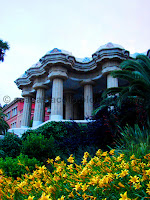
            The park was leased by Eusebi  Güell whose intention was to create a stylish park for the Barcelona aristocracy. At the park entrance you can find the famous Dragon decorated in multiple colors, which has become a symbol of the city together with Sagrada Familia and other architectural and decorative elements created by Antonio Gaudi. Here too there is the house where Gaudi lived for a while, transformed now into a museum which exhibits very interesting furniture created by the great artist.
 
LA PEDRERA (CASA MILA)


  • Official site: -
  • Address: La Pedrera, Provenca, 261-265, 08008 Barcelona
  • Opening hours:  09:00 - 18:30 (Nov. – Feb.), 09:00 - 20:00 (Mar. – Oct.)
  • Tickets: aprx. 9.50€
  • Subway: Diagonal (green line, L3 and blue line, L5)


          Another Gaudi creation reaching the top of Barcelona attractions - this building was initially called 'Casa Mila' but it is mostly known nowadays under the name of "La Pedrera”, meaning „the quarry”. Gaudi's genius is probably best exemplified by this building, its fluid style as well as the colored mosaics being present all over the building.


F.C. BARCELONA STADIUM AND MUSEUM (CAMP NOU)

  • Official site: http://www.fcbarcelona.cat/web/english/
  • Address: Aristides Maillol, entrance no 7 08028, Barcelona
  • Opening hours for the museum: 10:00 - 20:00 (M - Sa, 4 apr. – 9 oct.) – Camp Nou tour and museum, 10:00 – 18.30 – for the museum in the rest of the year, 10:00 – 14.30 (Su, holidays), 10:00 – 15:00 – in the days with Champions' League (no Camp Nou tour)
  • Tickets: free – children 0 - 5 years; 15.50€ – children 6 - 13 years (Camp Nou tour and museum); 19.00€ – adults (Camp Nou tour and museum)
  • Subway: Collblanc (blue line, L5); Badal (blue line, L5)

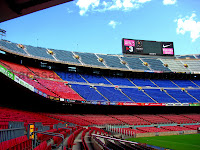
          If you are a football fan here is a museum you cannot miss. You will find all the trophies won by the club, photographs and statues of the team stars.  Also here you can admire the Champions’ League Trophy won by the team in 2009. For as much as 19 Euro you get a tour behind-the-scene of Europe's largest stadium and a visit within the museum.


THE SPANISH VILLAGE (POBLE ESPANYOL DE MONTJUIC)

  • Address: Avda. Marques de Comillas
  • Museum opening hours:  9:00 – 20:00 (M), 9:00 – 2:00 (Tu - Th), 9:00 – 4:00 (F), 9:00 – 5:00 (Sa), 9:00 – 24:00 (Su); 9:00 – 20:00 (24 Dec.), 9:00 – 14:00 (25 Dec.),  9:00 – 20:00 (1 Jan.), 9:00 – 20:00 (M - Th, 12 Jan. – 8 Feb.)
  • Craft stores opening hours:  10:00 – 20:00 (summer), 10:00 – 19:00 (spring and autumn), 10:00 – 18:00 (winter)
  • Tickets: free – children under 4 years, 8.90€– adults, 5.60€ – children 4 – 12 years, 20€ – families (2 adults + 2 4-12 year children), 6.60€– students, 6.60€ – elderly (over 65 years), 12€ – Poble Espanyol + MNAC (permanent and temporary exhibits), 5.50€ - night ticket
  • Subway: Espanya (green line, L3 and red line, L1) then a 15 minutes walk.
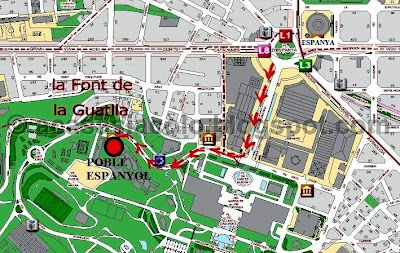
This tourist attraction if represented by a small Spanish village with different replica areas of architectural styles from different parts of Spain. Since its conception, in 1929, El Poble Espanyol has been considered a different space, unique within Barcelona's landscape. Its rustic looks, of country village with narrow streets and squares, framed by the natural surroundings of the Montjuic Hill and set away from the urban traffic, offer the visitors an invite to take a break, spend some time away from the city noise and enjoy a glass of Sangria in a silent oasis.

          Poble Espanyol is also the host of many art and crafts shops wherefrom you can purchase traditional Spanish products. Here too you can watch the famous Flamenco Show - Tablao de Carmen about which you can find out more from here:  http://www.tablaodecarmen.com/index.php?lang=en.


THE BARCELONA ZOO

  • Address: Parc de la Ciutadella s/n 08003 Barcelona
  • Opening hours: 10:00 - 17:00 (01 Jan. – 27 Mar.), 10:00 – 18:00 (28 Mar. – 15 May), 10:00 – 19:00 (16 May – 15 Sept.), 10:00 – 18:00 (16 Sept. – 30 Oct.); 10:00 – 17:00 (31 Oct. – 31 Dec.); 10:00 – 12:00 (25 Dec.)
  • Tickets: 16.50€ - adults; 9.90€ – 3 - 12 year old children; 8.60€ – elderly; 5.00€ - people with disabilities
  • Subway: Ciutadella (yellow line, L4) then a 10 minutes walk; Barceloneta (yellow line, L4)

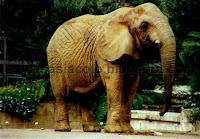
          The Barcelona Zoo is situated in Ciutadella Park (Parc de la Ciutadella) – the best way of reaching it is walking to the park and there after follow the signs to the Zoo. The facility exhibits a large variety of animals, a restaurant, a pick-nick area, a store, electric mini-cars, ponies and a mini-train.


THE PICASSO MUSEUM (MUSEO PICASSO)

  
  • Official site: http://www.museupicasso.bcn.cat/en/
  • Address: Montcada, 15-23, 08003 Barcelona
  • Opening hours: 10:00 - 20:00 (Tu - Su), closed (M)
  • Tickets: 10.00€ – museum + temporary exhibitions; 6.00€ – temporary exhibitions
  • Subway: Jaume I (yellow line, L4)


          A very popular art gallery, the museum arranged the works of the great artist in chronological order, from early creations to the final ones. This arrangement offers a fascinating image of the development in Picasso's thinking and shows the time evolution of the things that made him famous in the entire world.


THE MONTJUIC CASTLE (CASTELL DE MONTJUIC)

  • Address: Carretera de Montjuïc, 66  08038 Barcelona
  • Opening hours: 9:00 - 19:00 (M - Su, 1 Oct. – 31 Mar.), 9:00 - 21:00 (M - Su, 1 Apr. – 30 Sept.)
  • Tickets: Free
  • Subway: Paral-lel (purple line, L2 and green line, L3) then funicular railway upwards (change at the same station) if you do not want to climb the hill on foot; you may then climb forward through the park or take the cable car  for an enchanting view over Barcelona.
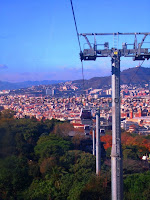
           The Montjuic Castle is located at the top of the hill bearing the same name, 170 meters above sea level. The castle is actually an old military fortress with a long history closely tied to the one of the city itself. From here you can enjoy the best view of the entire city and also from here you can access the famous cable car to enjoy the same wonderful view.

THE MAGIC FOUNTAIN OF MONJUIC (FONTANA DE MONTJUIC)

  • Official site: -
  • Address: Palau Nacional - Parc de Montjuïc, 08038 Barcelona
  • Opening hours: 19:00 – 21:00, music 19:00 – 19:30and 20:00 – 20:30 (F si Sa, Oct. – Apr.); 21:00 – 23:30, music 21:00 – 21:30 and 22:00 – 20:30 (Tu,F, Sa si Su, May – Sept.)
  • Tickets: Free
  • Subway: Placa Espanya (green line, L3 si red line, L1)


An extravaganza of light, music and water that would be a shame to miss!